The mobile phone has been the ultimate gateway to the internet for well over a decade. But what happens when the internet itself begins to shift toward decentralization? That’s the question Solana Mobile is not just asking, but answering.
In the world of Web3, where decentralized applications (dApps), digital assets, and permissionless services are rewriting the rules of online interaction, mobile has lagged behind. Mainstream smartphones weren’t designed to support private keys, on-chain transactions, or native crypto experiences. They’ve always needed third-party apps to bridge that gap, until now.
Solana Mobile is building a new category of devices tailored for the decentralized web. Not simply Web3-compatible, but Web3-native. It’s a bold move that aligns with the Solana blockchain’s mission of scalability, speed, and accessibility, and one that could redefine what our phones can actually do.
Let’s break down what this really means, starting with the company’s philosophy and the device at the heart of its vision: the SKR.
The Web3 Vision
Solana Mobile isn’t trying to tweak the current mobile ecosystem. It’s trying to rethink it entirely. That means raising the kinds of questions most phone makers never go near, the ones that hit at the heart of how much control they really have. Why should your phone be dependent on cloud services that track your data? And why can’t your wallet and identity be natively part of your phone, rather than hidden in some app with a dozen permissions?
The vision is simple on paper but radical in practice: a mobile experience where users own their data, control their keys, and interact with blockchain applications as easily as they scroll through social media today.
To get there, Solana Mobile isn’t just addressing software, it’s also building the hardware to match.
Meet SKR
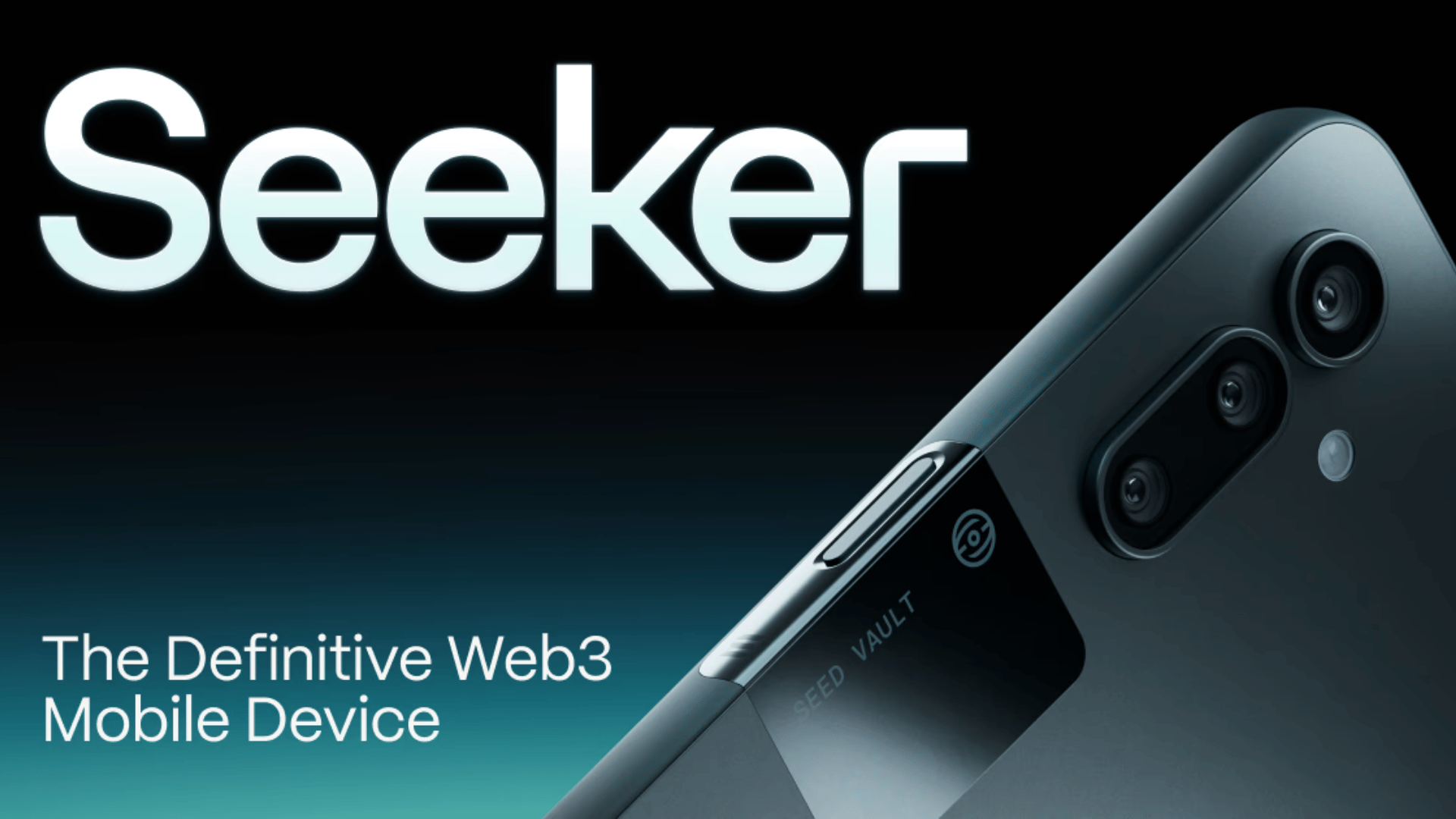
SKR (pronounced like “seeker”) is Solana Mobile’s flagship device, and more than just a smartphone, it’s a reference point for what mobile could look like in the Web3 age.
From the outside, SKR may resemble any modern smartphone: sleek, minimal, polished. But inside, it’s wired for crypto from the ground up. It’s built to be unstoppable in a decentralized world.
Native integration with Solana wallets, built-in secure seed vaults, and deep support for dApps make SKR a first-of-its-kind device, not just an Android phone with some crypto apps preloaded.
Think of it as the Ledger of phones, but with the full functionality of a high-end smartphone. That’s the space SKR is carving out. And yes, it’s a bold one.
Where Innovation Meets the Everyday
SKR isn’t just for crypto pros. In fact, what makes it interesting is how it turns advanced blockchain functionality into everyday utility.
- Seed Vault: A secure enclave that stores your private keys locally, never in the cloud, never exposed.
- dApp Store: A Web3-native app store free from the rules of centralized services. Install what you want. Built on Android and ready for custom tools, it’s a natural fit for those building Solana dApps. It’s optimized for speed and scale, two things that mobile users expect and Web3 often struggles with.
Blockchain Meets Hardware
Integrating hardware with blockchain isn’t new, but doing it at this level is. Many phones can run wallet apps, but that’s not quite the same as designing a phone around the chain itself.
With Solana baked into the SKR’s core architecture, interactions with on-chain assets become seamless. NFTs, DAOs, staking, governance, it’s all one tap away. No QR codes, no browser extensions, no friction.
Even more interesting: this architecture opens the door to things like hardware-verified transactions, biometric-secured signing, and native token-gated experiences. Picture unlocking a city event, not with a QR code, but with your wallet-native mobile device verifying your NFT ownership on the spot.
What’s “Home Seeker”?
Among the product names floating around the Solana Mobile universe is something called “Home Seeker.” While not yet deeply explained on the site, its placement hints at a special role in the ecosystem.
Is it an onboarding platform? A simple dashboard for your crypto life? A connectivity layer for dApps? Possibly all of the above. What’s clear is that Home Seeker sits right alongside SKR, not as a separate product, but almost as part of the device itself. If so, it could be a game-changer for how non-technical users get into crypto on mobile.
Building Tools for Builders
Solana Mobile isn’t just going after consumers, it’s courting developers too. A good phone needs apps, and a Web3 phone needs dApps. That’s where platform support becomes a cornerstone of this ecosystem.
SKR runs on an Android framework, but with added layers for blockchain access. For developers, this means access to:
- Web3 APIs optimized for Solana
- Secure signing modules and transaction builders
- Integration points with the dApp Store
- Open documentation and SDKs
The idea is to create not just a phone, but a platform, one that developers can build on as freely as they do on traditional app ecosystems, but with the added layer of crypto-native features.
The Grants That Fuel Innovation
Innovation doesn’t come from big ideas alone, it also needs support. Solana Mobile recognizes this, which is why the team has launched a Grants Program aimed at Web3 developers and startups.
Whether it’s an NFT-based messaging app, an on-chain photo gallery, or a decentralized ride-share platform, the grants program is designed to help these ideas become real, usable applications on the SKR platform.
And it’s not just money. Grantees get access to technical support, design resources, and possibly even spotlight placement in the dApp Store. It’s the kind of ecosystem play that echoes what iOS did for the App Store, except this time, with decentralization at the heart.
How to Get SKR
Curious about owning one? SKR is available to order directly through the Solana Mobile site. What really grabs your attention is the way they’ve handled payments. Sure, you can pay with fiat, but crypto payments are integrated right into the checkout flow. That’s not an afterthought. That’s strategy.
Early buyers not only get the hardware, they often get exclusive perks, like dApp Store credits, airdrops, or even early access to new ecosystem features. It’s not just purchasing a phone. It’s buying into a movement.
Staking SKR
Crypto isn’t just about spending, it’s also about participating. That’s where staking enters the picture, and Solana Mobile’s SKR isn’t just a device; it’s a gateway to deeper engagement with the network.
By staking SKR tokens, users can support the security and functionality of the Solana Mobile ecosystem, while earning rewards in return. It’s a mechanism borrowed from the world of proof-of-stake, applied here with a mobile-first twist.
Staking may enable access to premium features, early access to dApps, discounts in the ecosystem, or governance rights over certain platform features. While full details are still emerging, the intent is clear: staking isn’t just technical, it’s experiential.
Think of it like becoming a shareholder, but in a decentralized and fluid way. You’re not just part of the platform, you’re helping shape what it becomes. The SKR Whitepaper, while certainly technical, reads more like a blueprint for a new kind of digital citizenship. It defines the foundational architecture of the device, the logic behind its crypto-native integrations, and the broader roadmap for how Solana Mobile sees the future unfolding.
At its core, the whitepaper outlines three guiding principles: sovereignty, interoperability, and performance. These aren’t just buzzwords, they’re the coordinates Solana Mobile uses to navigate the intersection of hardware and decentralization.
One section lays out the secure enclave system that protects users’ keys. Another dives into the modular software stack that separates Solana-native layers from the base Android OS. Then there’s the dApp Store infrastructure, engineered to be open, uncensorable, and developer-friendly.
The roadmap hints at even more: biometric-secured DAOs, cross-chain compatibility, and hardware identity layers that could one day eliminate logins as we know them.
This whitepaper isn’t just a product manual, it’s a philosophical document. And it tells us: this isn’t a phase. It’s a foundation.
Compliance Without Compromise
Let’s face it, regulation isn’t sexy. But it’s necessary. In the crypto space, where the line between innovation and chaos can blur fast, clear legal frameworks are what separate sustainable platforms from speculative experiments.
Solana Mobile has embedded a full legal and policy framework right into its operational model. That includes standard documents like Terms of Sale and Privacy Policy, but also newer crypto-native agreements, like a Deposit Agreement for preorders made in digital assets.
Everything is written with clarity, not legalese. And that matters. The goal isn’t to box users in, it’s to protect them. When you’re bringing people into a new kind of financial thinking, the words you choose shape how they feel and interact. About the tech, and about the trust.
MiCA and the European Lens
If you’re in the EU, or even paying attention to global crypto policy, MiCA (Markets in Crypto-Assets Regulation) is a massive deal. This is the first full set of rules for digital assets rolled out by a major economy. It shows that Solana Mobile is playing the long game. If Web3 is going mainstream, it has to be legal, secure, and accessible. MiCA compliance is part of that growth curve.
For institutions, governments, and risk-averse users, this document serves as a bridge. One that connects bold innovation with legal legitimacy.
Support That Gets It
Good technology can stumble if support systems don’t keep up. Fortunately, Solana Mobile seems to understand that customer service is as much a part of the experience as the device itself.
The site features clearly marked support channels, extensive FAQs, and a dedicated help center. There’s even a straightforward return policy and warranty process, both signs of a company that doesn’t want to trap users in endless email loops.
But beyond the basics, there’s something more interesting: crypto-native support. Need help recovering a seed phrase stored in the Seed Vault? Want to troubleshoot a stuck transaction? This isn’t your average smartphone customer call. Getting a device that connects directly to your money can feel like a bit of a leap. Solana Mobile makes things easier by including a clear return window and a hardware warranty. If you change your mind, there’s a return timeline that doesn’t require lawyers or persuasion.
And the warranty? It doesn’t just cover the screen and battery. It includes the secure modules that store your private keys. Because when your phone is also your wallet, assurance has to go deeper.
Privacy That Actually Means Something
Most phones say they care about privacy. Then they turn around and collect everything from your location to your voice samples. Solana Mobile flips that script.
Your keys never leave your device. Your transactions are signed locally. Your data isn’t sold, because it’s not even collected in the first place.
There’s no cloud backup of your identity. No automatic syncing of your crypto behaviors. In fact, the phone lets you choose exactly what dApps can access, and when. It’s opt-in, not opt-out.
This isn’t privacy theater. It’s architecture-level protection, built into the DNA of the SKR.
Practicing What It Preaches
Privacy policies are one thing. Ethical data practice is another. Solana Mobile goes beyond compliance, embedding user-first decision-making into how it handles information.
For example, the device doesn’t preload third-party trackers. It doesn’t “anonymize” your data and sell it anyway. Its business model isn’t built on attention, it’s built on utility.
This approach earns something rare in tech today: user trust. And as we move into an era where devices double as banks, IDs, and community keys, that trust becomes the most valuable commodity of all.
The Path Ahead
Solana Mobile isn’t just selling a phone. It’s creating a fresh kind of relationship between people and the digital world. One where users own their tools, their data, and their identities.
The SKR is the first glimpse of that future, a device that doesn’t just “support” Web3, but is shaped by it, designed for it, and committed to scaling it.
Whether you’re staking tokens, building dApps, or simply exploring what it means to carry your identity in your pocket, Solana Mobile is making a bold promise: the decentralized web won’t just live on desktops or in your browser. It’ll live in your hand. Natively. Seamlessly. Securely.
The age of Web3 mobile isn’t coming. With SKR, it’s already here.
How to buy Solana Mobile Seeker (SKR)?
You can usually buy this token on major centralized or decentralized exchanges that list it. Always rely on the project’s official channels and trusted aggregators (such as CoinMarketCap or CoinGecko) to find the updated list of markets, and double-check the contract address before trading.